CloutCart
A startup plan for better brand–creator partnerships.
- Stage
- Concept & venture plan
- Team
- 6 collaborators, 1 week
- My focus
- Strategy & alignment

The opportunity
Reach is not the same as relevance.
Our desk and competitor research pointed to a gap. D2C startups and small brands need relevant creators, and nano and micro creators need partnerships that suit their work. DMs, spreadsheets and costly agencies leave both sides doing the coordination.
Our review covered DIY outreach, platforms such as Upfluence and AspireIQ, and agency-led models. The opening was accessible discovery plus a complete collaboration workflow.
Product strategy
Two starting points. One collaboration.
A short onboarding quiz captures creative fit, and matching leads into a shared space. The core release covered onboarding, profiles, briefs, discovery, chat, collaboration requests, basic contracts and payments. Campaign tracking and richer creator insights wait until the core collaboration loop is useful.
Fit is a combination, not a filter. The matching engine would start with profile tags and rule-based scoring, then use brand feedback and campaign outcomes to improve over time.
- Niche
- Tone & values
- Platform
- Campaign type
A proposed match
Brand feedback and campaign outcomes tune the next recommendation.
Business model
Free to enter. Paid tools to grow.
The primary model is recurring subscriptions on both sides of the marketplace. Free plans lower the entry barrier, and paid plans add discovery capacity, visibility, insights and support. Managed campaigns and commissions at scale would be secondary revenue.
Brands
- Free₹010 swipes a week, 5 briefs
- Growth₹2,49925 swipes a week, 15 briefs, filters
- EnterpriseCustomAdvanced analytics, dedicated support
Creators
- Free₹0A profile and a visibility dashboard
- Plus₹299Enhanced insights, priority listing
- Pro₹699Campaign alerts, brand chat, history
Operating model
The service behind every collaboration.
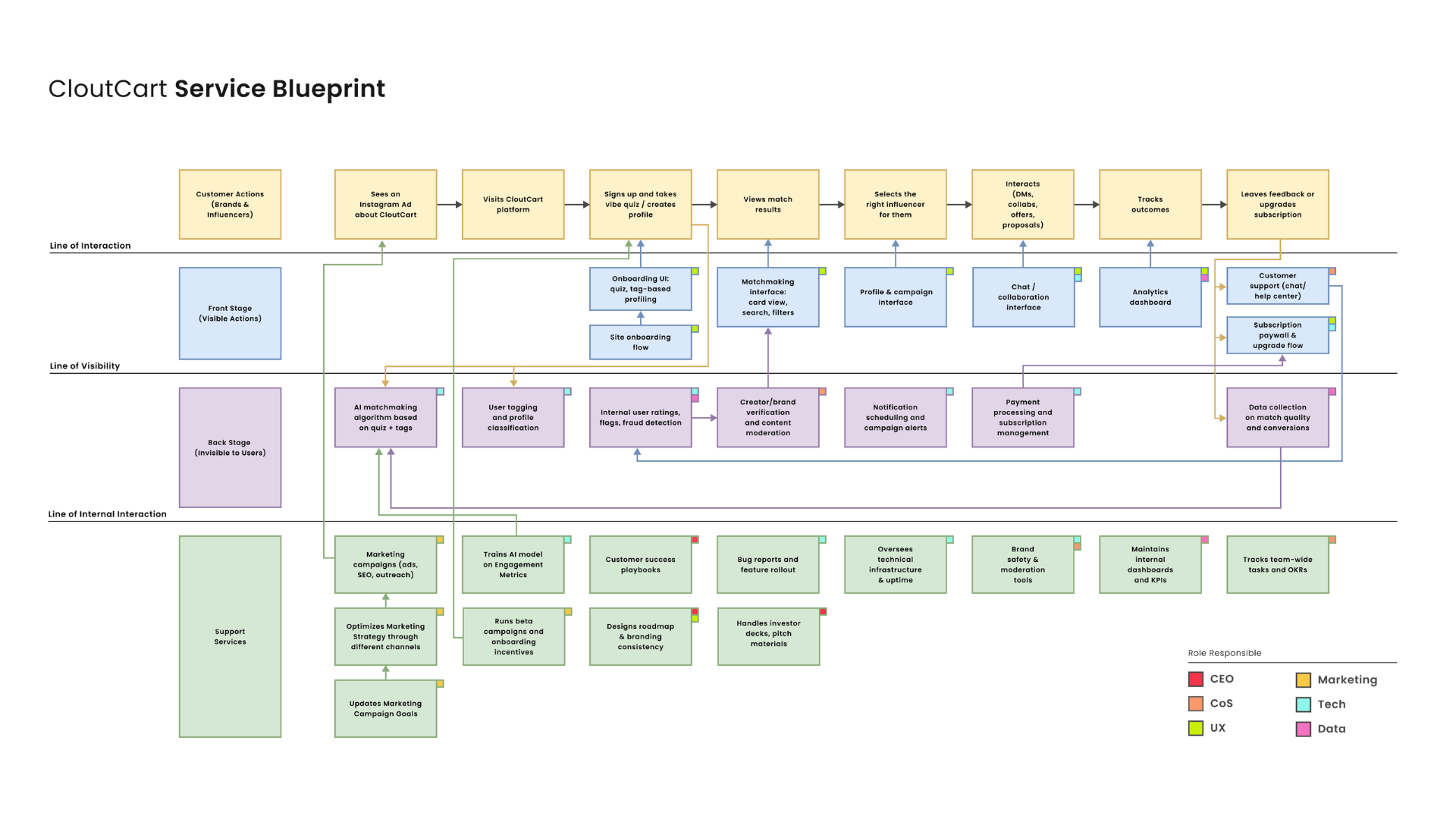
Matching alone is not enough. Verification, moderation, payments and customer success are what make the service viable, so the blueprint connects each customer action to its interface, backend work and supporting team.
Go-to-market
We planned to validate the match, then earn the right to scale.
A staged plan links product development to acquisition, retention and operational capacity, with its own goals and capital assumptions for each phase. What could compound is better match-quality data, repeat relationships and a denser network: advantages to build and test, not assumptions that AI alone creates a moat.
MVP & beta
Prove the match
60%+match satisfaction$250k–500k · Pre-seed / angelProduct–market fit
Prove repeat value
70%campaign retention$1.5m–3m · Series AExpansion
Build for new markets
5+markets$5m–10m · Series B
Building the plan
One venture. Six connected functions.
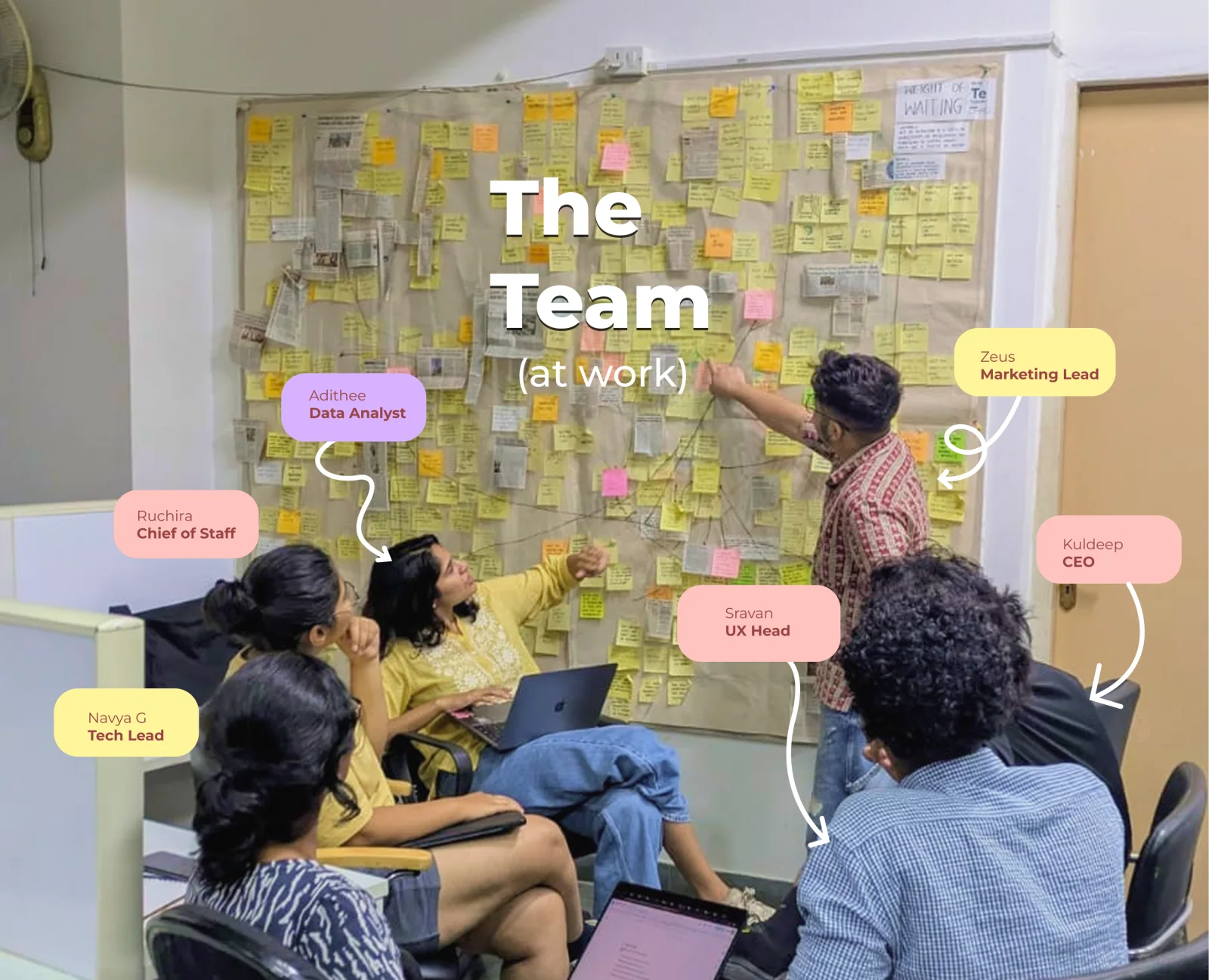
We moved from stakeholder and competitor research through personas, SWOT, pricing, product architecture and service planning to a pitch. I held the venture direction, in a CEO role, and alignment across the team’s decisions, alongside Ruchira on coordination, Zeus on branding and marketing, Sravan on UX, Navya G on technology and Adithee on data and matching insights.
The takeaway: a useful product idea needs an equally considered operating model. Who does what, how value flows, and what to test first.