Future of Currency is Alive
When people stop trusting money, they build their own. A 2050 world where currency must be cared for to keep its value, read back for what it means for banks, loyalty programmes and public money today.
- Horizon
- 2050, after a fictional collapse in 2037
- One rule
- Value must be cared for to keep its value
- Recognised
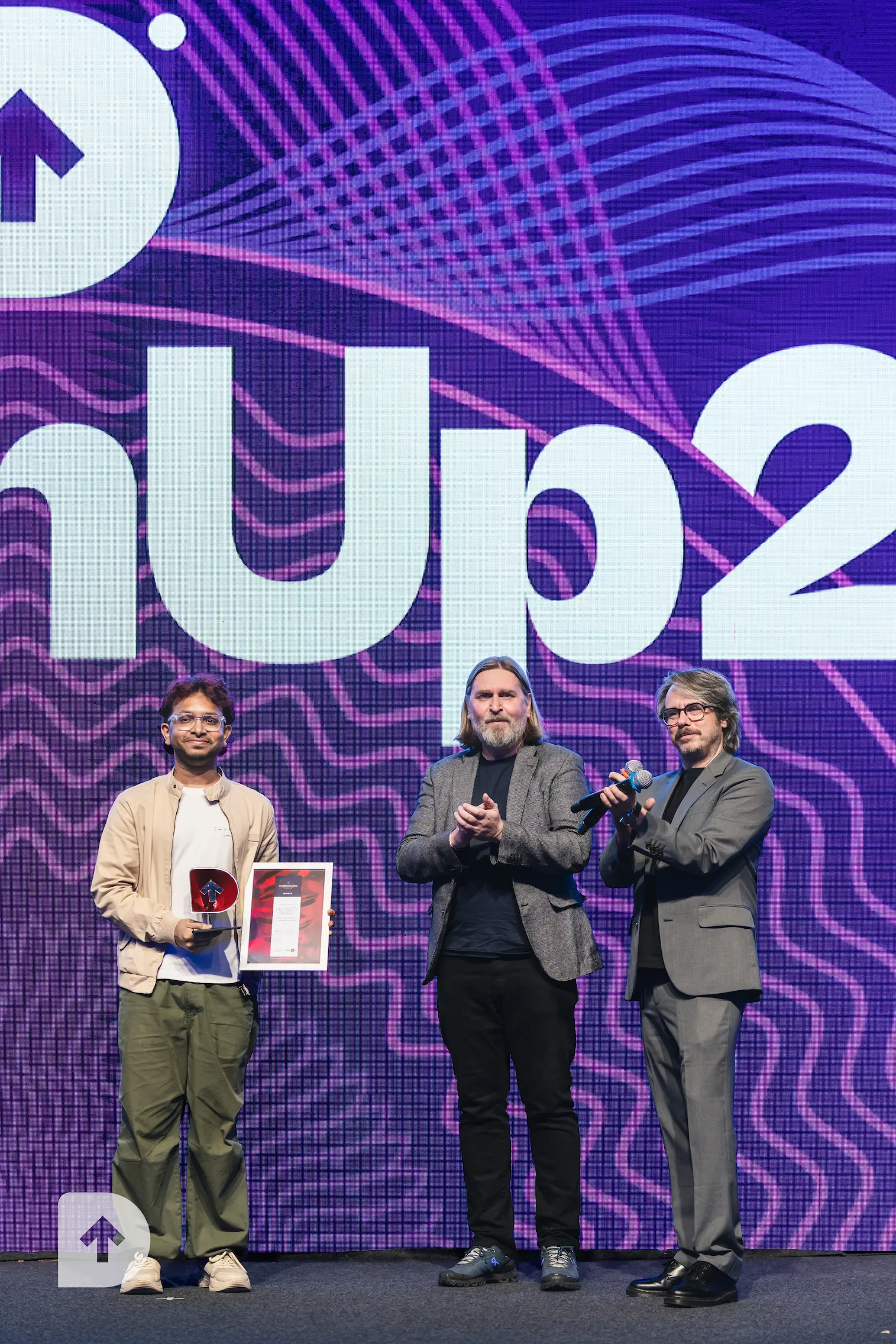
- Winner, DesignUp Futures Challenge 2025, judged by futur2
The premise
Money that dies if you sit on it.
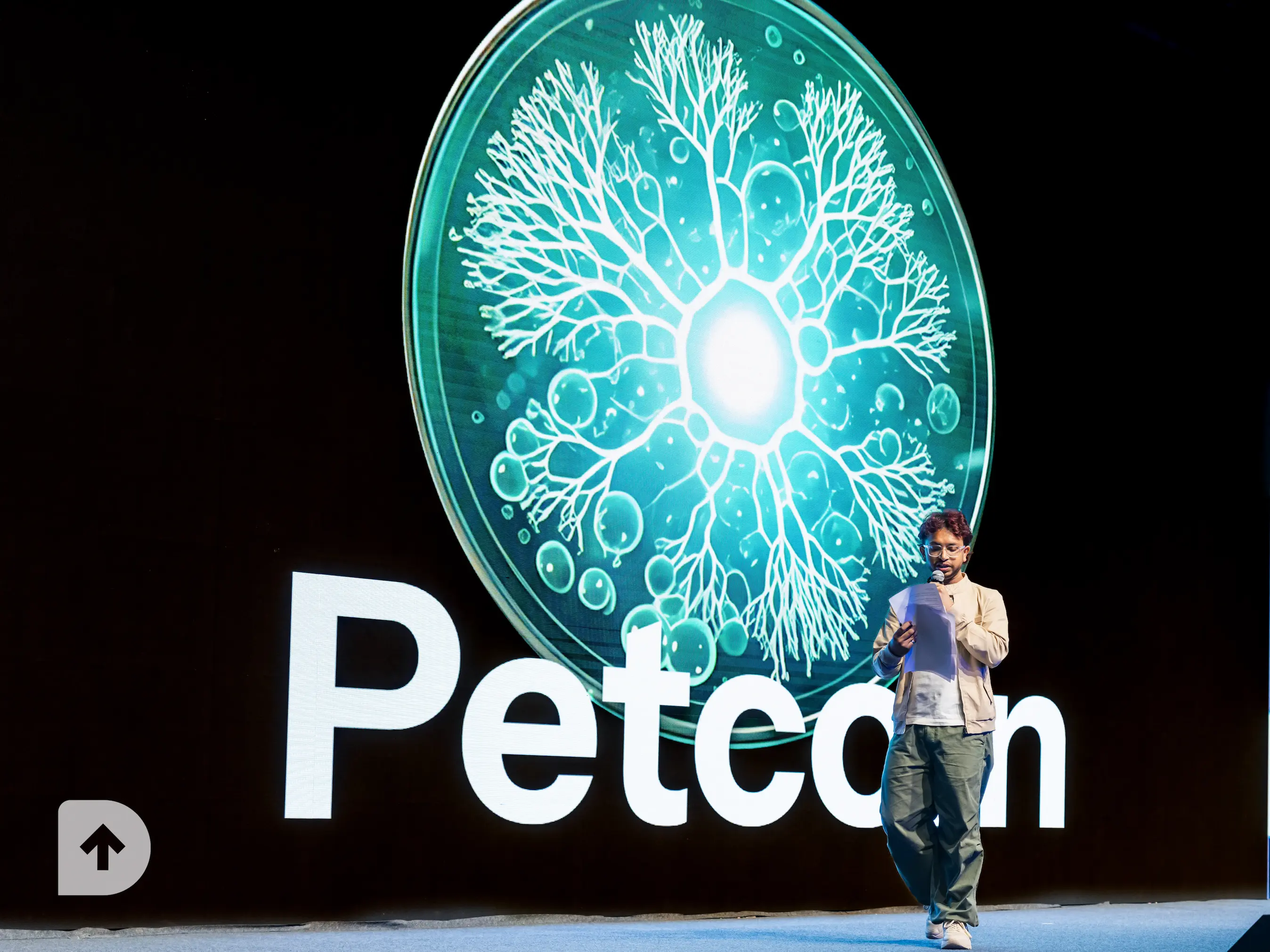
The DesignUp Futures Challenge set the brief: imagine currency in 2050, and the world that makes it possible. Petcoin is a living coin. It thrives when it changes hands and decays when it is hoarded. Breath Currency moves the same rule inside the body. The full world is on the project site; this page is about what it sends back to the present.
The rules they replaceThe rules of the Commons
- Value is whatever you can accumulateValue is finite
- Interest rewards waitingValue must circulate
- Wealth concentrates by defaultValue must support collective wellbeing
- Care is unpaidCare is the work that keeps it alive
Where this started
My introduction to speculative design.
Dunne and Raby’s Speculative Everything was my way in: design as a way to ask questions, not only to ship answers. The futures cone gave the project its discipline. This is one preferable future inside the plausible.
The argument
Trust in money breaks before money does.
The collapse in the fiction is dated 2037. The reasoning behind it is already visible, one step at a time.
- 01Work and income come apart
The IMF puts almost 40% of jobs worldwide, and 60% in advanced economies, in AI’s path, and expects inequality to worsen in most scenarios.
- 02Grievance replaces trust
Edelman 2025: 61% of people hold a moderate or high sense of grievance. The high-grievance group trusts none of the four institutions.
- 03People route around the system
Over 60% of the world’s workers earn informally. When Argentina’s peso failed in 2002, an estimated 2.5 million people traded in barter clubs with their own notes.
- 04Their money carries their values
Self-governed systems need a unit of value that encodes what they care about. Kenya’s Sarafu did it digitally for 50,000 people through COVID.
So the question underneath the project is not “what if money decayed”. It is: when enough people stop believing the current system will feed them, what do they build, and who is ready for it?
Precedents and rails
People have built their own money before. Now the rails are programmable.
Each part of the fiction has already run somewhere, and the infrastructure that would let it run at scale is on every bank’s roadmap.
- 1932Money that lost value if held
The town of Wörgl, Austria issued notes that lost 1% a month unless spent. Employment reportedly rose. The central bank shut it down within fourteen months.
- 1995Care as a unit of account
Japan’s Fureai Kippu paid elder care in time credits you could bank, or send to a parent in another city. Around 400 branches ran it.
- 2020Public money with an expiry date
Shenzhen handed out 10 million digital yuan to 50,000 people, valid for about a week at 3,389 approved merchants.
- 2030Programmable rails go mainstream
Capgemini expects stablecoins, tokenised deposits and CBDCs to carry 4% of global payments by 2030, with $230bn of bank revenue at risk.
And the quiet one: your airline miles already expire. Loyalty points are a decaying currency already, and nobody designed them to reward anything but spending.
Making it tangible
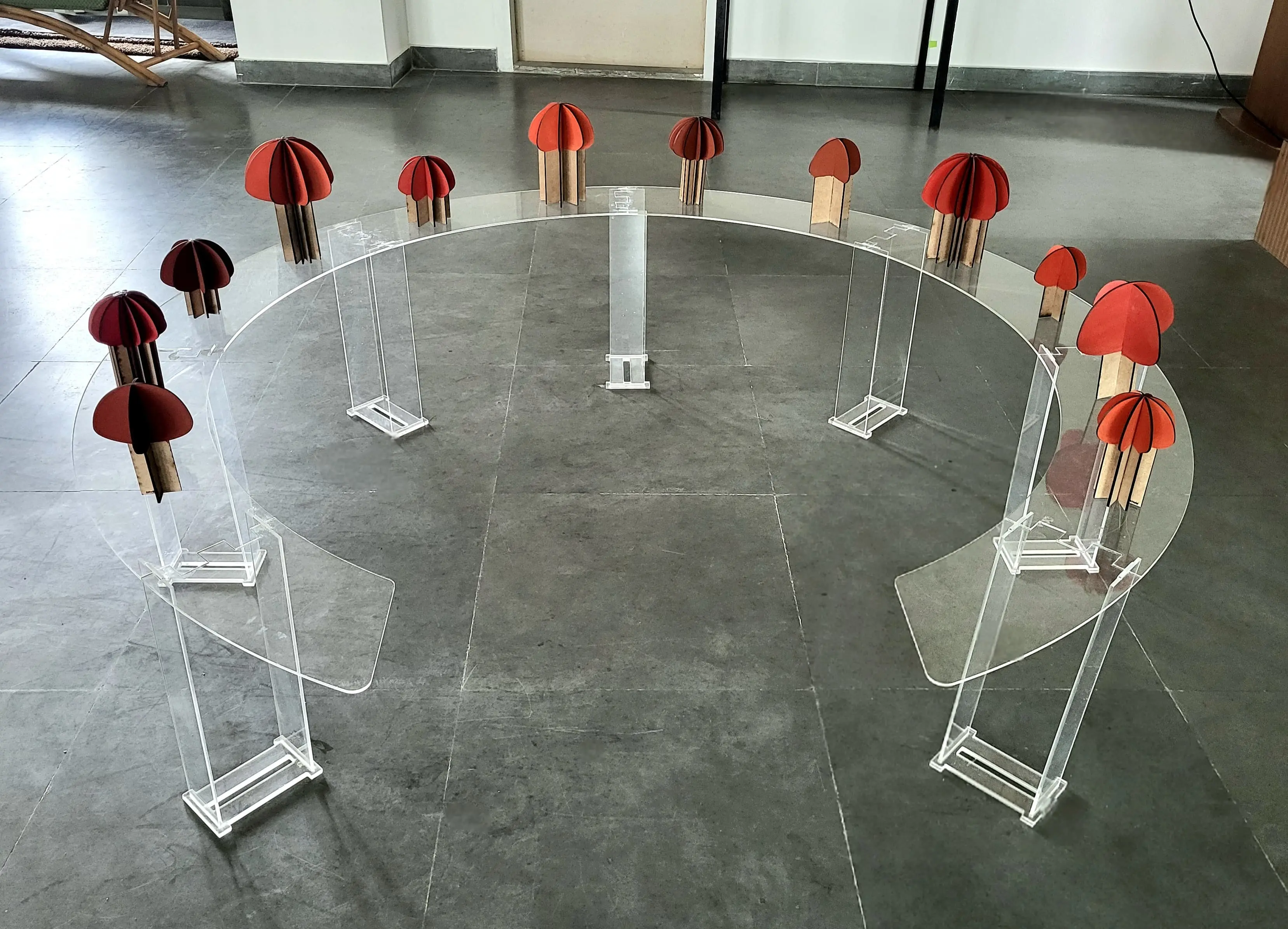
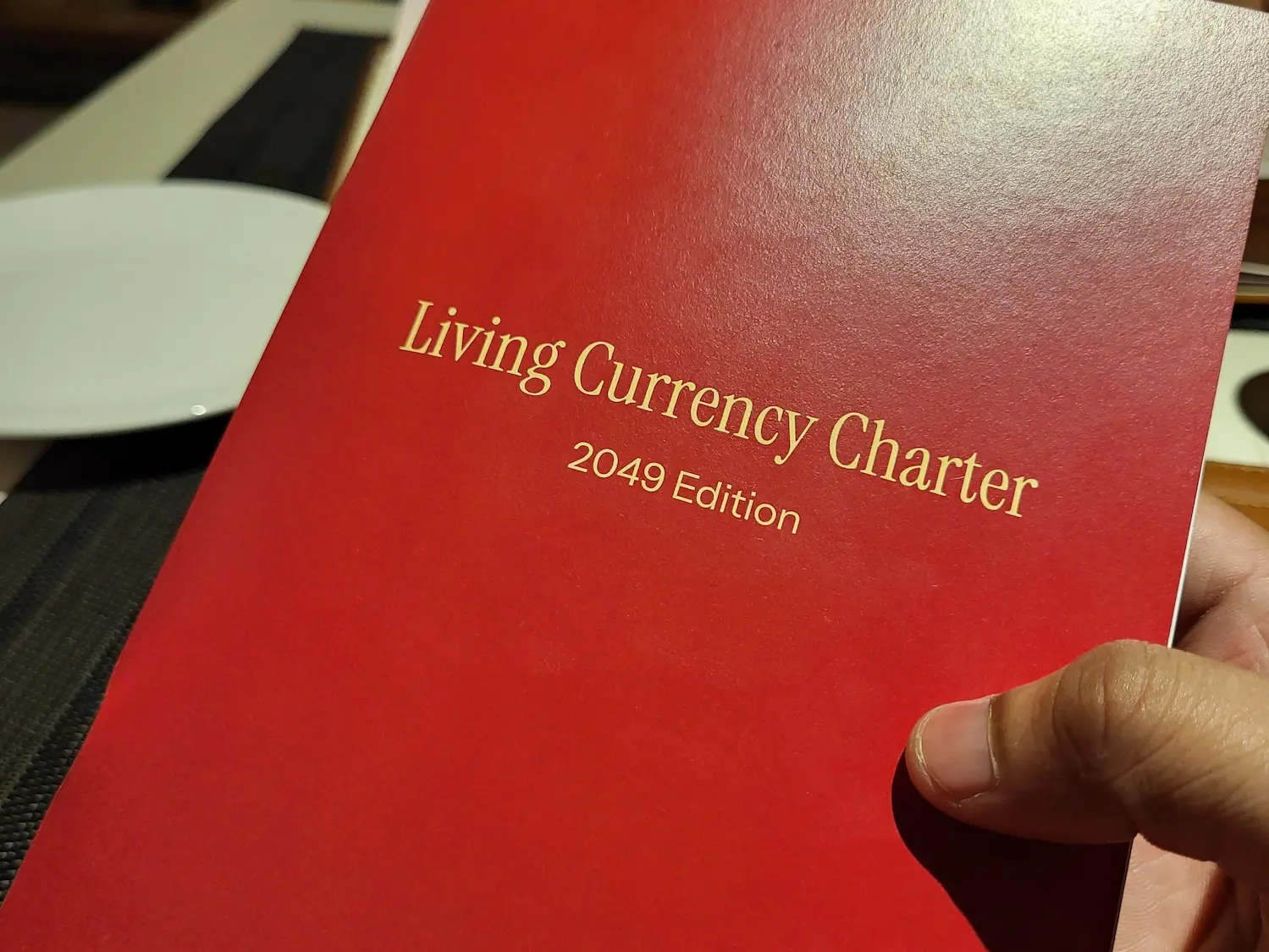
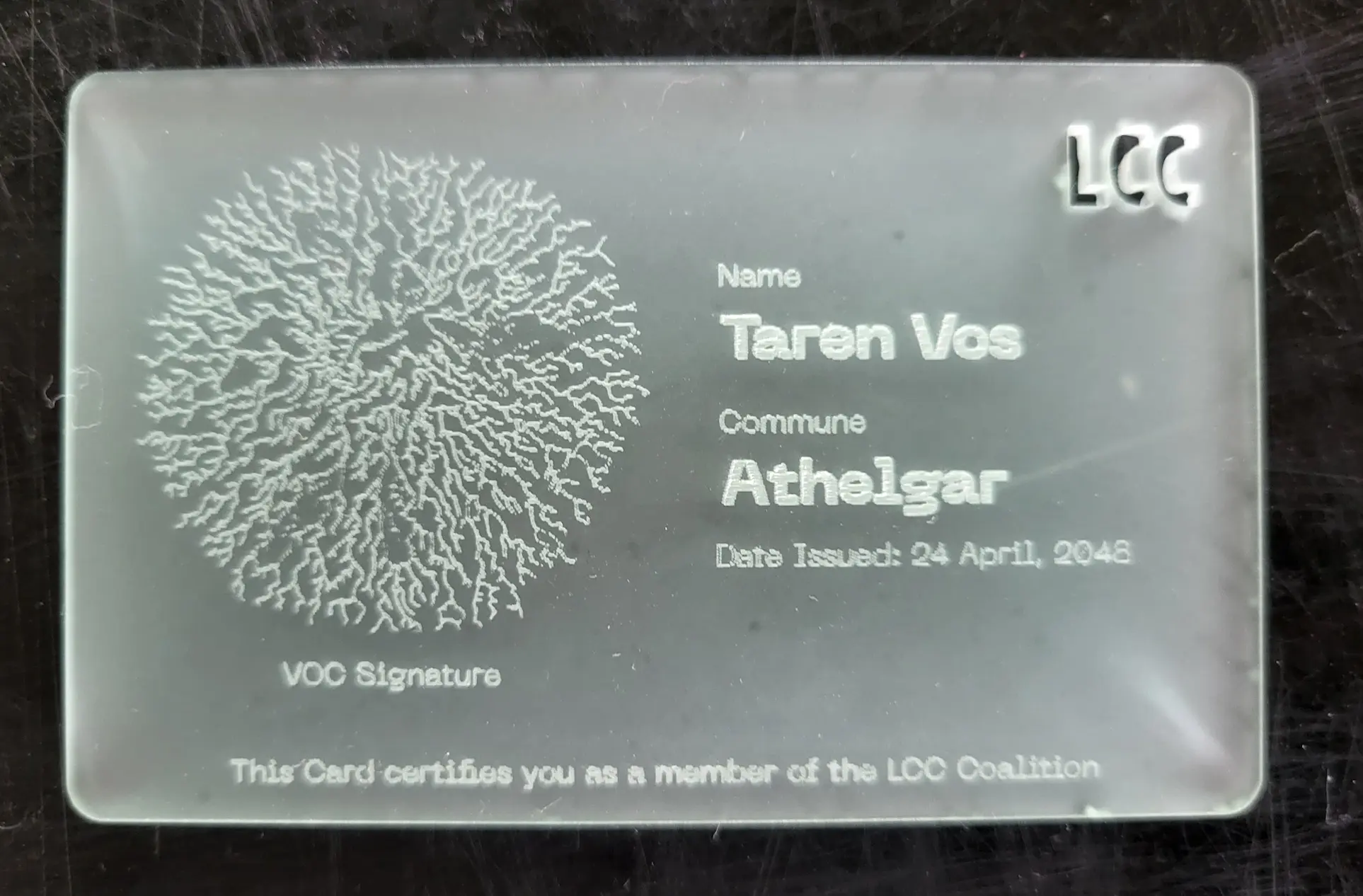
A future you can hold, and argue with.
The mundane objects do the work. People argue with a rulebook and an ID card in a way they never argue with a slide.
Implications for today
The money question isn’t how it moves. It’s who still gets believed.
Petcoin is invented. The doubt it grows from isn’t. Most of the energy around money right now goes into the instrument: stablecoins, CBDCs, faster rails. What’s wearing out sits underneath, in the institutions those instruments ask people to believe.
- The rails
Banks, states and startups are racing to rebuild how money moves.
Faster money doesn’t repair trust. It lets doubt move faster. - The AI debate
Almost every argument about AI and the economy is an argument about jobs.
The sharper question is who owns the output. An economy that pays through ownership needs different money, and different institutions, from one that pays through wages. - What stays scarce
AI is making answers, images and persuasion close to free.
The premium moves to what can’t be generated: being believed. Every bank, brand and platform is now in the trust business, whether it has priced that in or not. - The long promises
Pensions, mortgages, insurance and payroll assume money and its institutions will still hold decades from now.
That assumption rarely appears on a risk register. It should be the first one there.
What we’re designing
What kind of institutions are we building money on?
The rules of money are becoming a design decision, and today they get written by default, in loyalty terms and CBDC pilots. The fiction rehearses the questions before they are live.
- 01What does it reward?
Interest, credit scores and loyalty points all encode a value, including the ones nobody wrote down.
- 02Can anyone contest it?
Is the appeal designed before the expiry? Shenzhen’s pilot money lasted about a week.
- 03What does it count as work?
Fureai Kippu counted elder care for decades. Money that can’t see care will misprice the work AI is least able to replace.
- 04What has to stay believed?
A pension outlasts governments, products and companies. The institution behind it has to earn belief for just as long.
Recognition
DesignUp Futures Challenge Winner, 2025.
One of three winning entries, chosen by futur2 studio. I presented it in a three-minute pitch on the DesignUp main stage and received the award from Thomas Kueber and Andreas Wegner. A year later its sibling, The Future of Design Comes First, won the same challenge. The full narrative, both currencies and the systems behind them live in the world of 2050.