Inventing Analogies
What if a number could feel familiar?
- Type
- Visual communication
- Format
- Individual study
- Covers
- Sugar, alcohol and caffeine
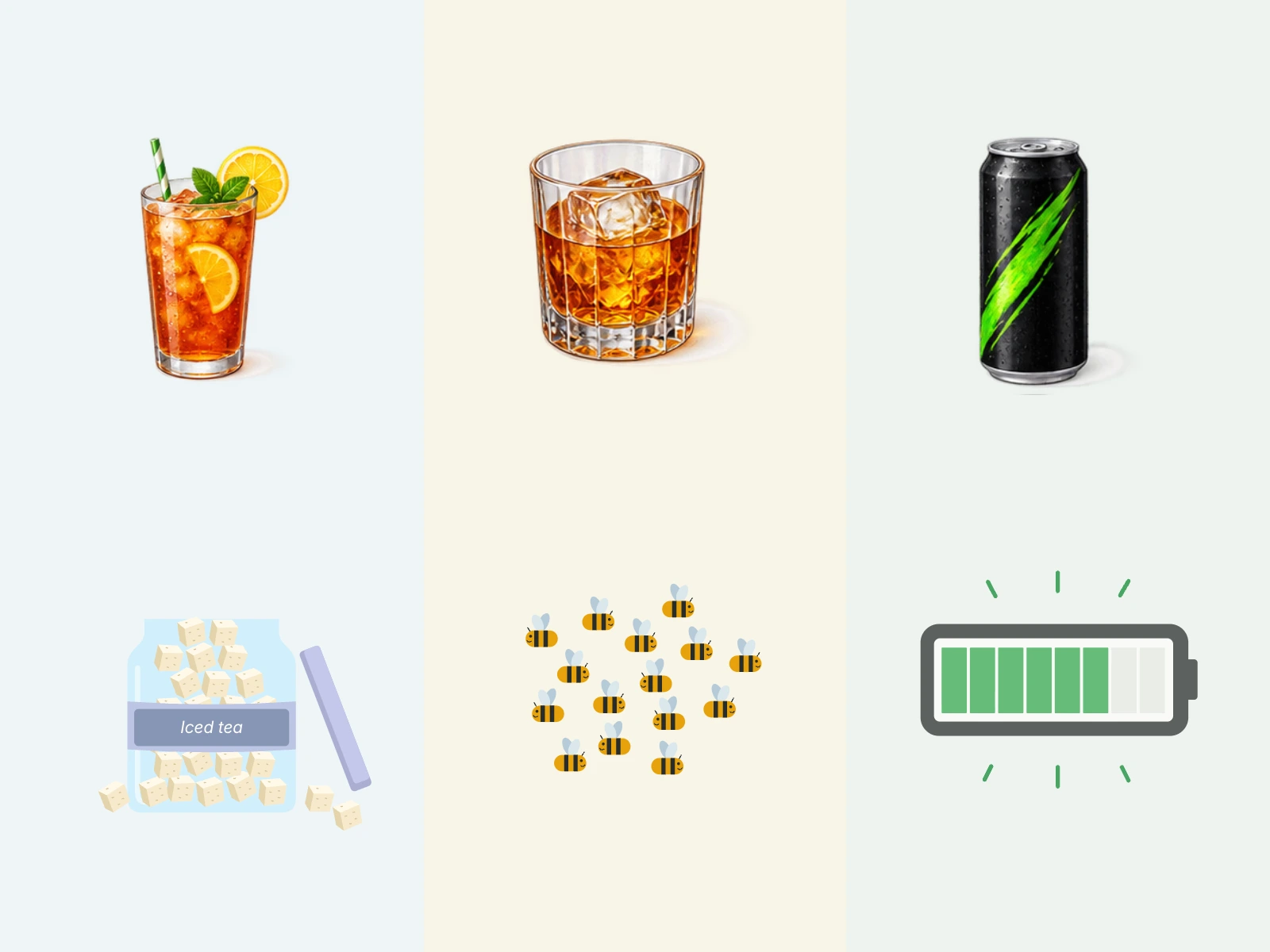
Sugar, alcohol and caffeine are usually described in grams, percentages and milligrams. I explored how everyday objects could turn those quantities into something we can picture.
Illustrative values from the original study, not verified nutrition information.
01 / Sugar
A quantity becomes a pile.
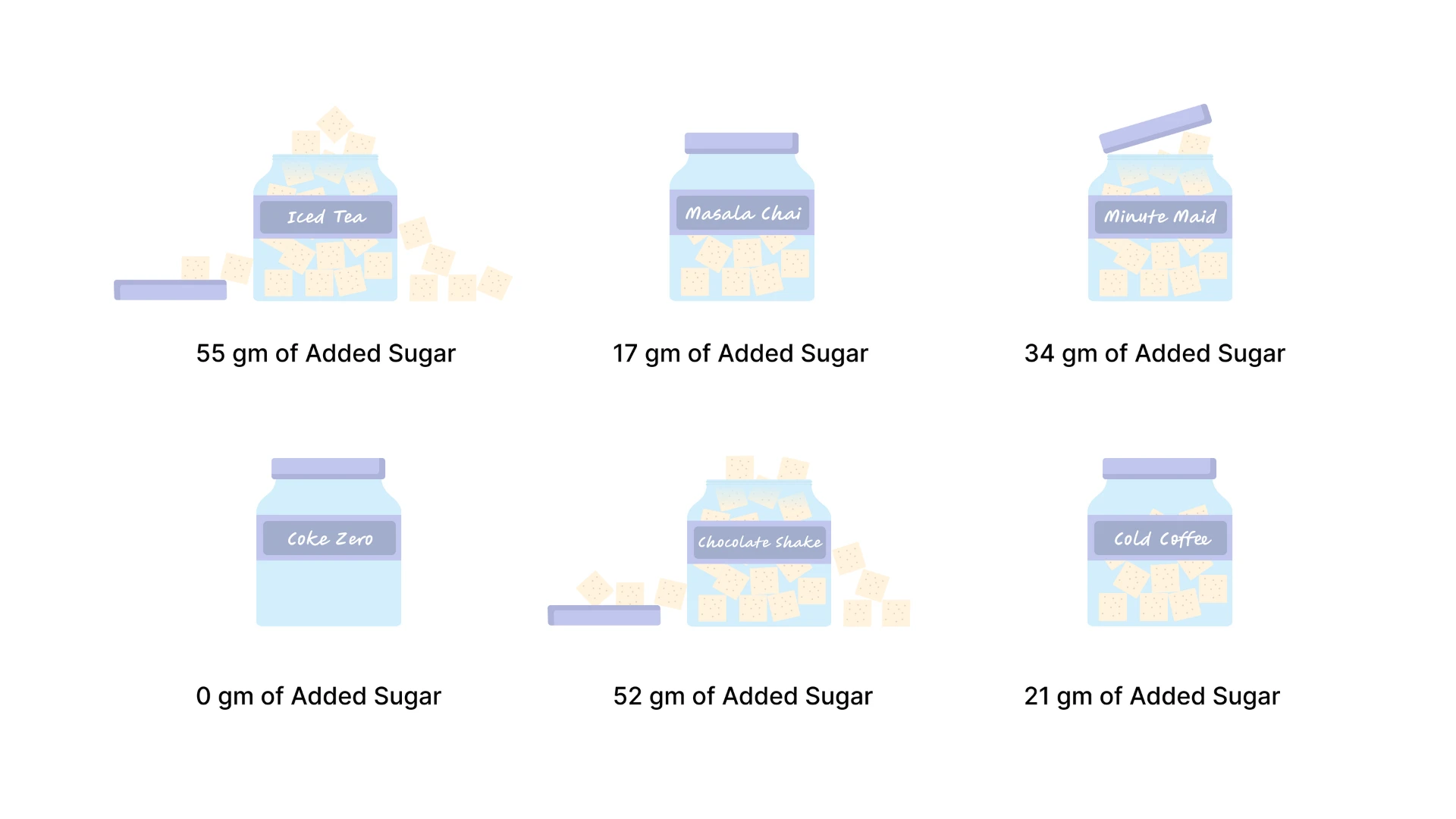
The jar represents a 50 g daily sugar reference. Cubes pile up inside it; overflow shows when this drink alone exceeds that amount.
Iced tea
Added sugar1 cube = 2 g of added sugarShown as rounded, whole symbols.
WHO recommends free sugars below 10% of daily energy: 50 g at 2,000 kcal. Added sugars count toward this total. WHO guidance ↗
02 / Buzz
A percentage becomes a buzz.
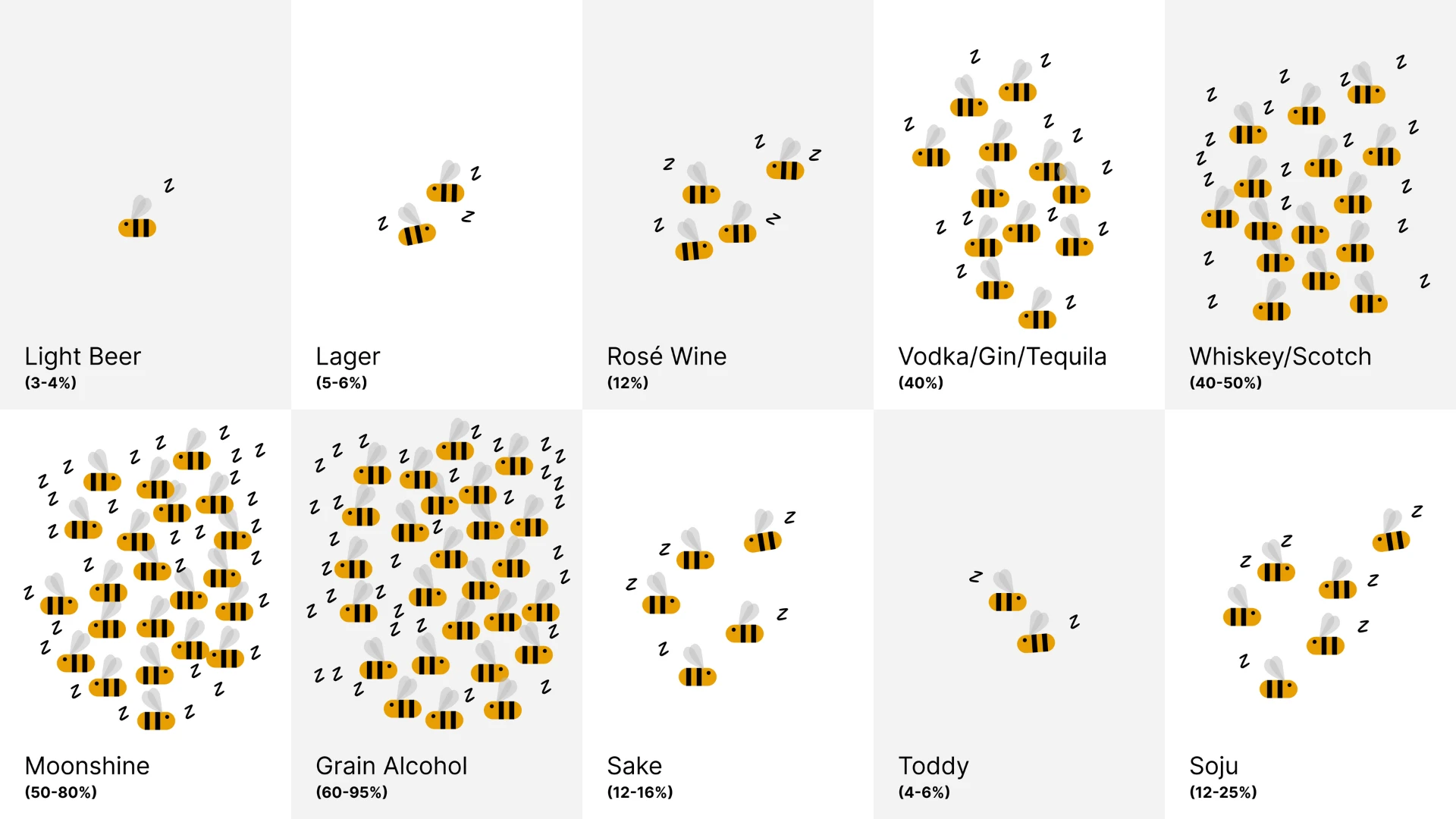
The shared idea of a 'buzz' connects alcohol to a swarm. A denser swarm represents a higher alcohol concentration.
Light beer
Alcohol by volume1 bee ≈ 3% ABVShown as rounded, whole symbols.
Swarm shown at the midpoint of study ranges. ABV describes concentration, not total alcohol consumed or how someone will feel.
03 / Caffeine
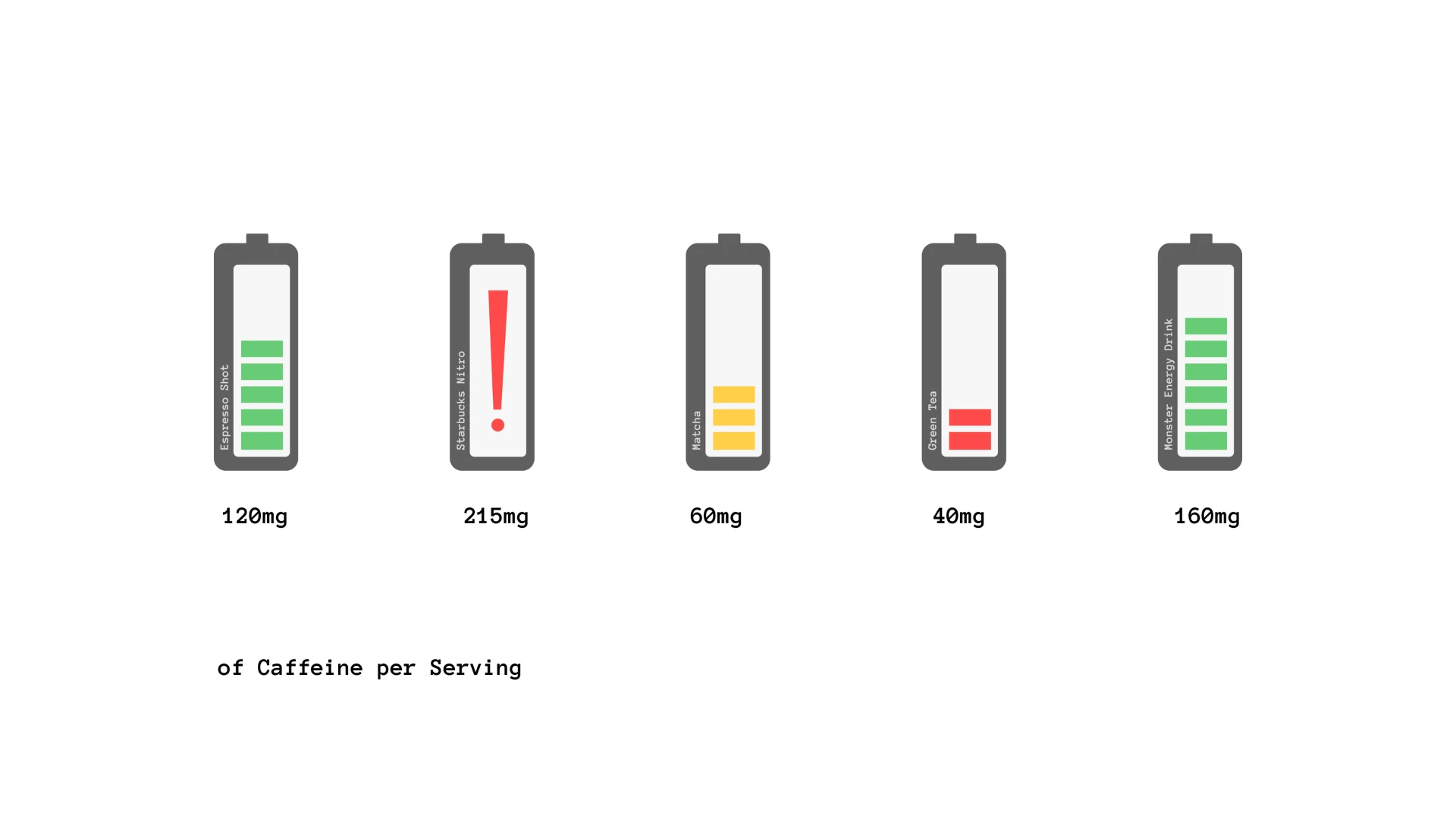
A number becomes a charge.
Caffeine fills the battery: red at low charge, amber in the middle, then green. Above 200 mg, the battery exceeds its visual capacity and throws an overcharged error.
Espresso shot
Caffeine1 bar ≈ 25 mg of caffeineShown as rounded, whole symbols.
200 mg is this study's visual cutoff, not a universal danger threshold. Colour represents battery charge, not health risk.
04 / Visual language
More than a different way to draw a chart.
The object needs a reason to be there. Each analogy connects a measurable quantity to an existing association: accumulation, buzz or energy. The jar, bees and battery borrow the forms of familiar things. Cubes, swarm density and charge increase with the underlying quantity. And overflow, a buzz and being charged add meaning beyond the number.
Original visual studies
05 / Reflection
A metaphor opens the conversation. It does not replace the data.
A jar makes accumulation visible. A swarm adds an emotional association. A battery borrows a language of energy. But none predicts a person's response. Keeping the number and unit alongside the analogy lets familiarity support precision, rather than hide it.