Cairn
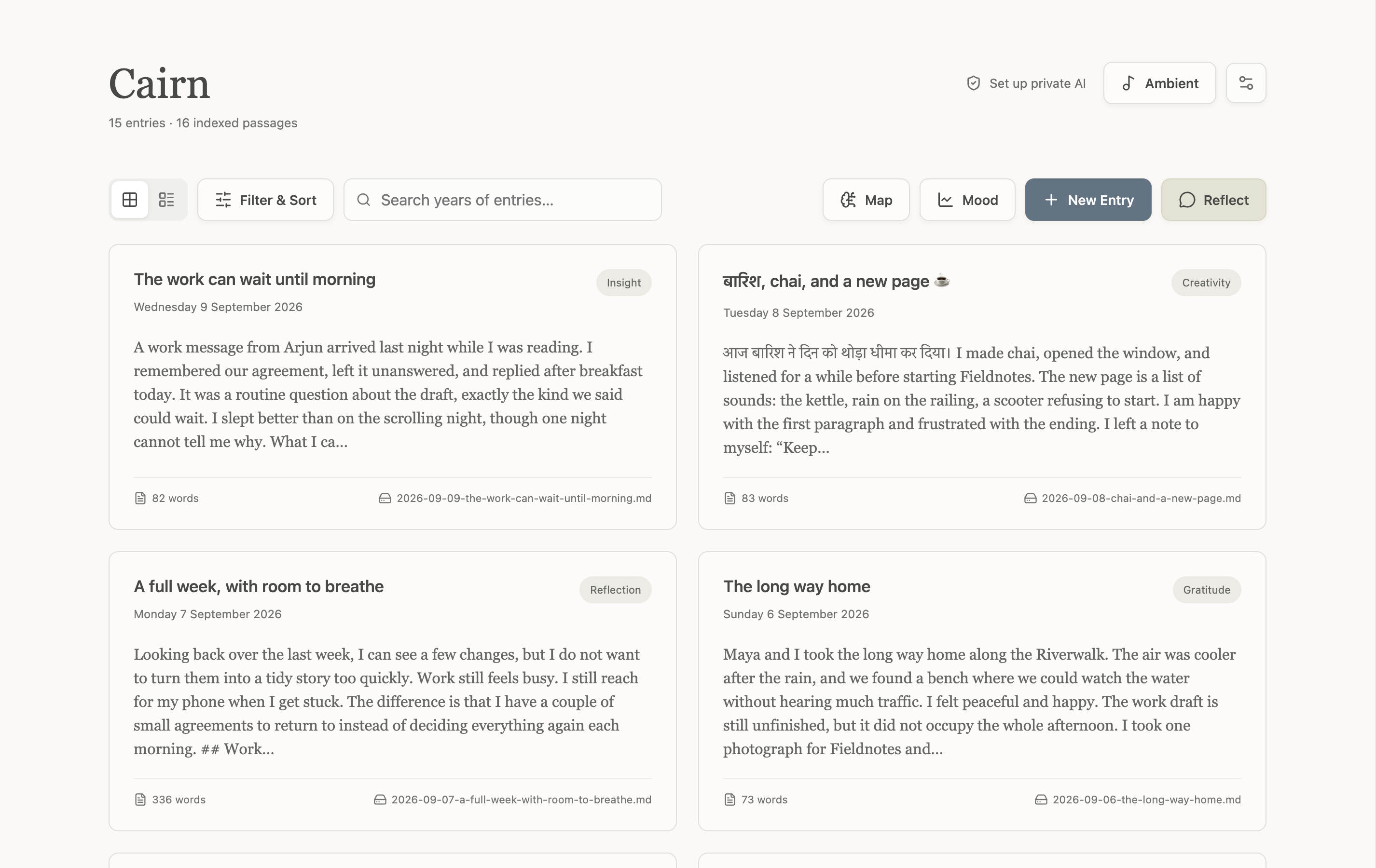
A journal that helps you return to your own writing, with intelligence that stays on your Mac.
- My role
- Product direction, interface + implementation
- Year
- 2026
- Status
- macOS 2.0.0-alpha.2, personal testing
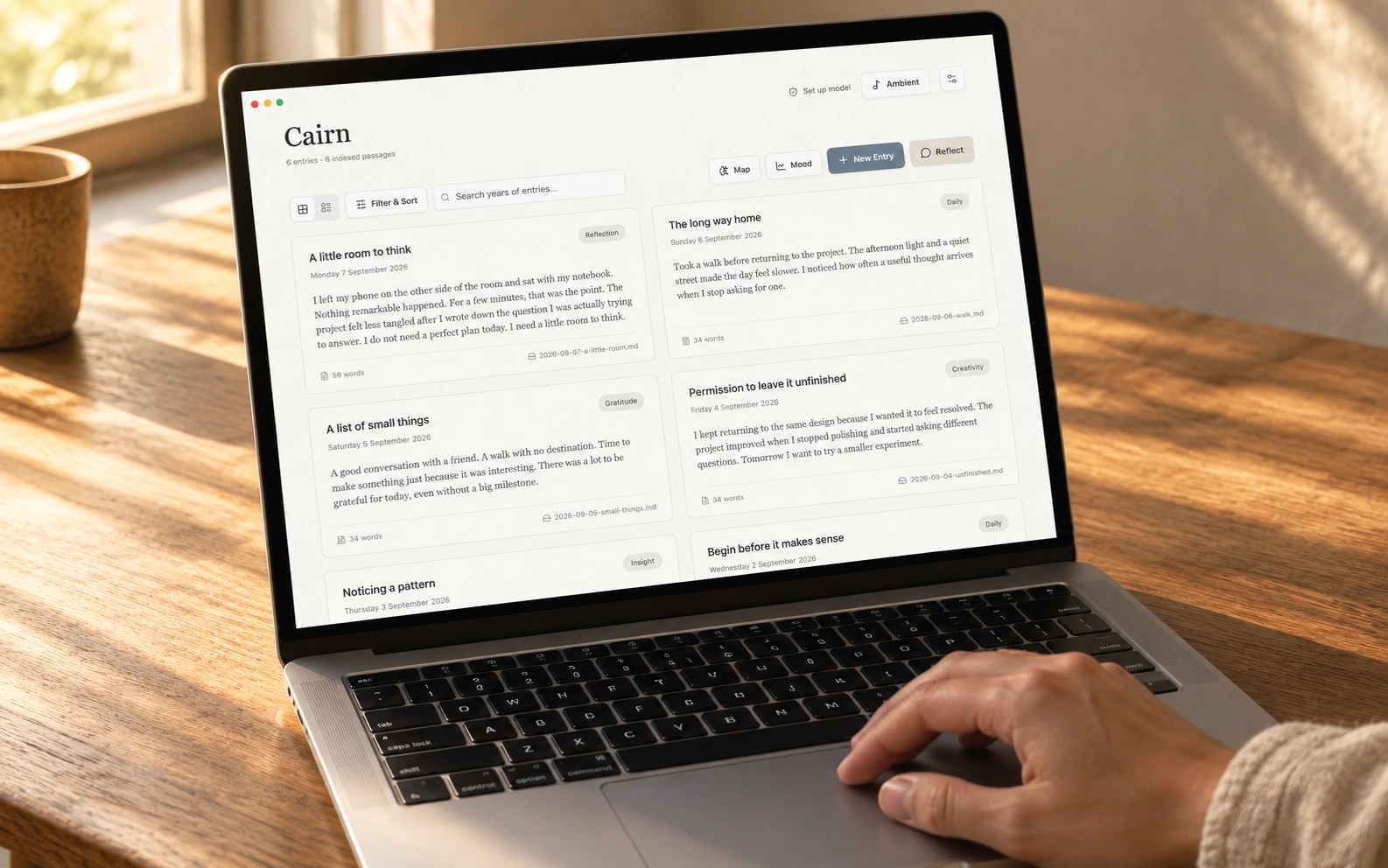
The opportunity
People already confide in machines. The machines were built to keep them talking.
Therapy and companionship was the most common use of generative AI in 2025. It arrived in the shape of a companion: a persona, a chat, a server. Journaling, the older tool for the same need, stayed a minority habit, kept regularly by 7% of British adults.
Search shows where it is heading. Cairn asks whether the model can serve the journal instead of replacing it.
Where it came from
Personal reflection, tied to someone else’s infrastructure.
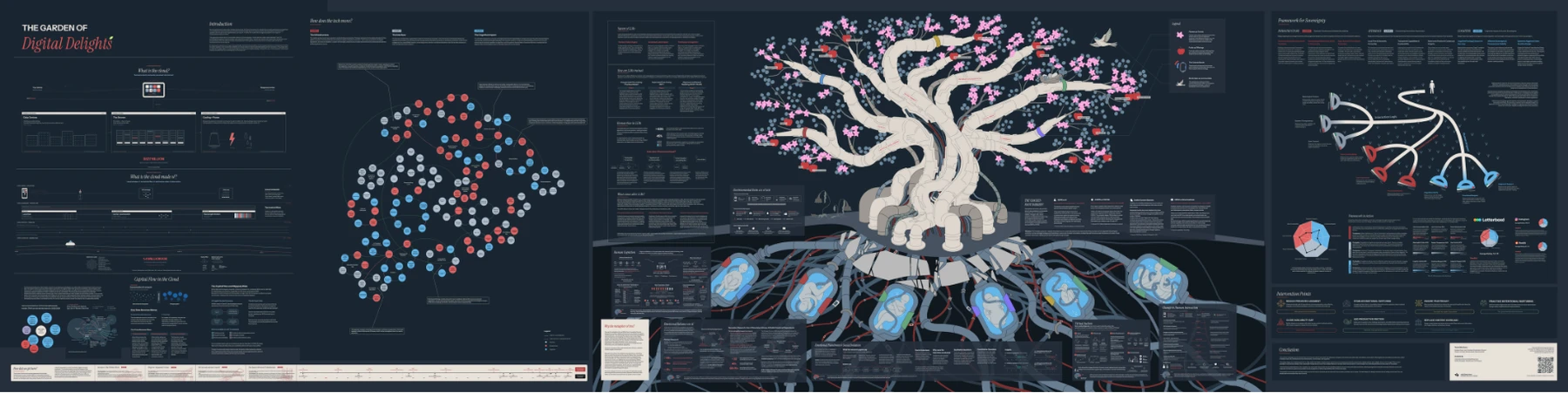
Cairn emerged from our systems exercise, The Garden of Digital Delights. The gigamap connected digital life with the infrastructure behind it, and I took private reflection forward into an independent app. View the systems project.
Research
Five people who already reflect with a chatbot. None of them called it a friend.
Five people who use ChatGPT, Claude, Gemini or Character.AI to process their lives were interviewed about what it does for them, what it replaced, and where it goes wrong. It had replaced the journal, not the friends: “Journalling with AI is the same as thinking in silence.”
Every good answer was paid for in typing, and the archive that would supply that context already existed, in the journal they had stopped keeping. Their notes also drew two loops. The people who had stepped out of them described the same exit: noticing the limits, then using it on purpose.
The evidence
A citation is a claim, not proof.
The secondary research showed how these tools fail. Eleven models affirmed users 49% more often than humans do, and those answers were trusted more and asked for again. Only 51.5% of sentences from generative search engines were fully supported by their citations.
Finding a passage, citing it and using it are three different events. Most interfaces show the second and imply the third. The honest case for AI here is modest, and the strongest durable effect in the literature belongs to returning to your own record.
- S1
- S2
- S3
- S4
- S5
- S6
- S7
- S8
- 8Retrieved
- 2Referenced
- ?Actually used
The decision
The archive comes first. Intelligence helps you revisit it.
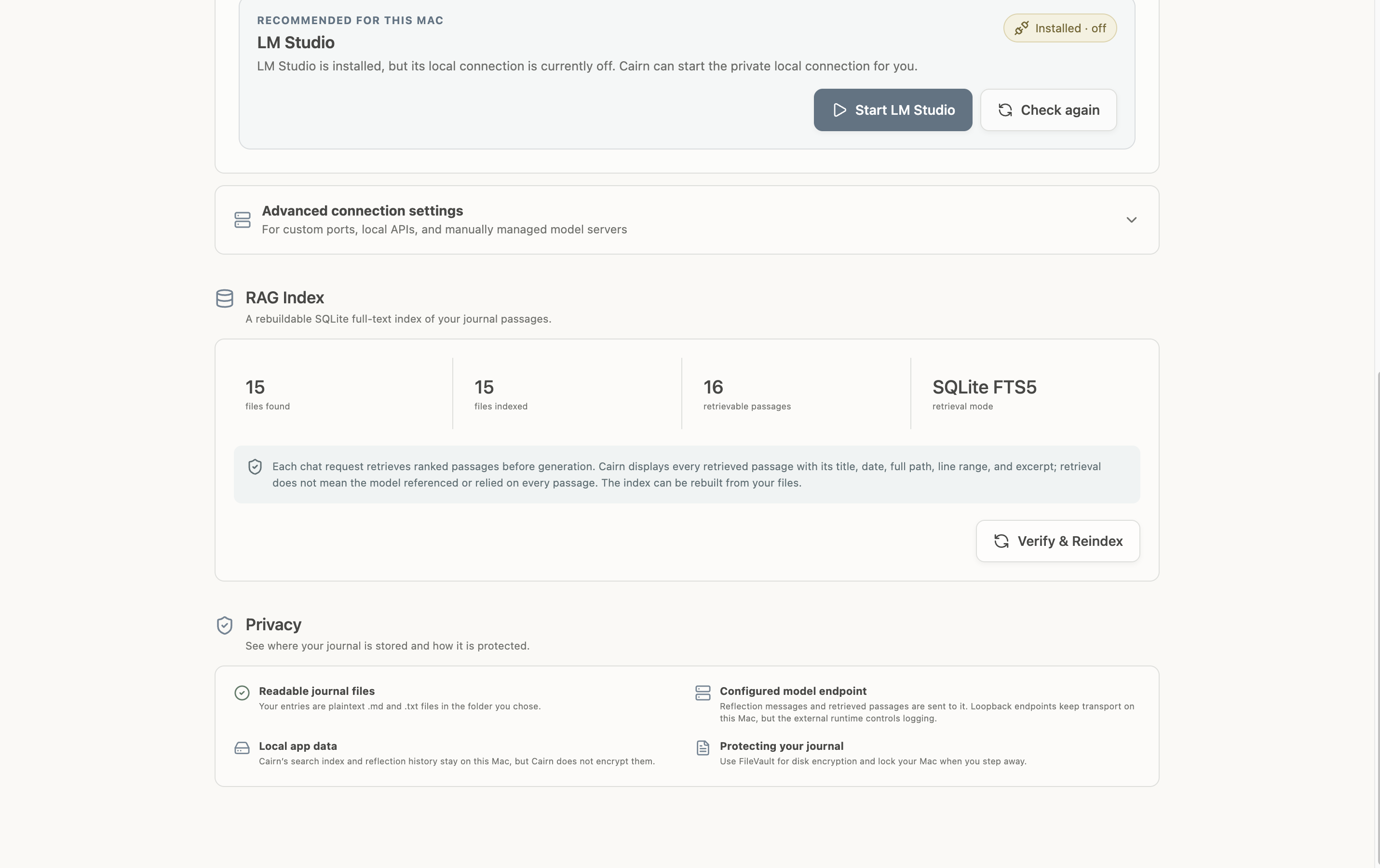
Ordinary files, local search, and answers traceable to source passages. The model lowers the labour of writing and retrieving, and the judgement stays with the writer. The journal still works when the model does not.
What I said no to
No persona, no streak, no server.
Also no push notifications, no Cairn account, and no cloud model as a fallback. Each would make the app easier to grow and worse at the one thing it is for.
When intimate writing leaves the device, it goes further than anyone meant: BetterHelp shared about seven million users’ data with advertisers, and a court ordered deleted ChatGPT conversations kept. None of these were hacks. They are features of a server, and a journal with no server has none of them.
A companion
Cairn
Reflection
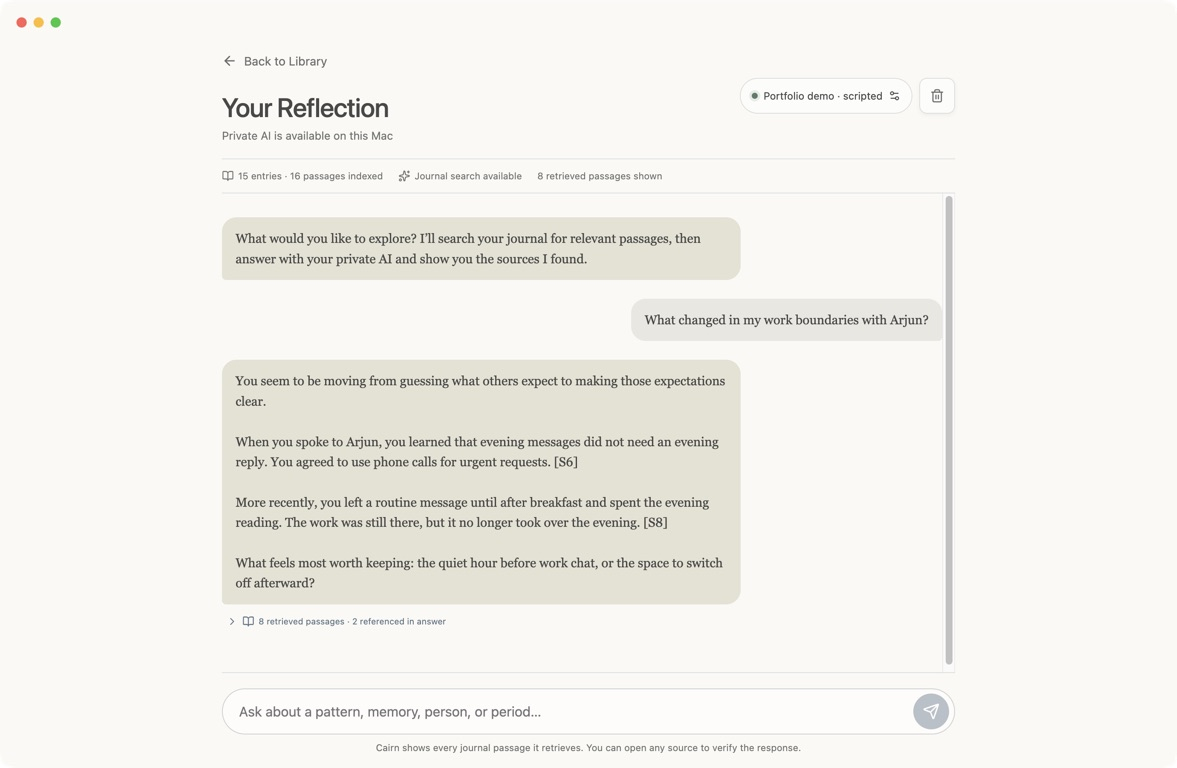
An answer you can trace.
Every answer shows what was retrieved against what was referenced, and each passage opens at its file and lines. Agreement means opening the passage. The answer closes with a question the writer answers, not advice.
What changed in my work boundaries with Arjun?
When you spoke to Arjun, you learned that evening messages did not need an evening reply. You agreed to use phone calls for urgent requests. [S6]
Returning
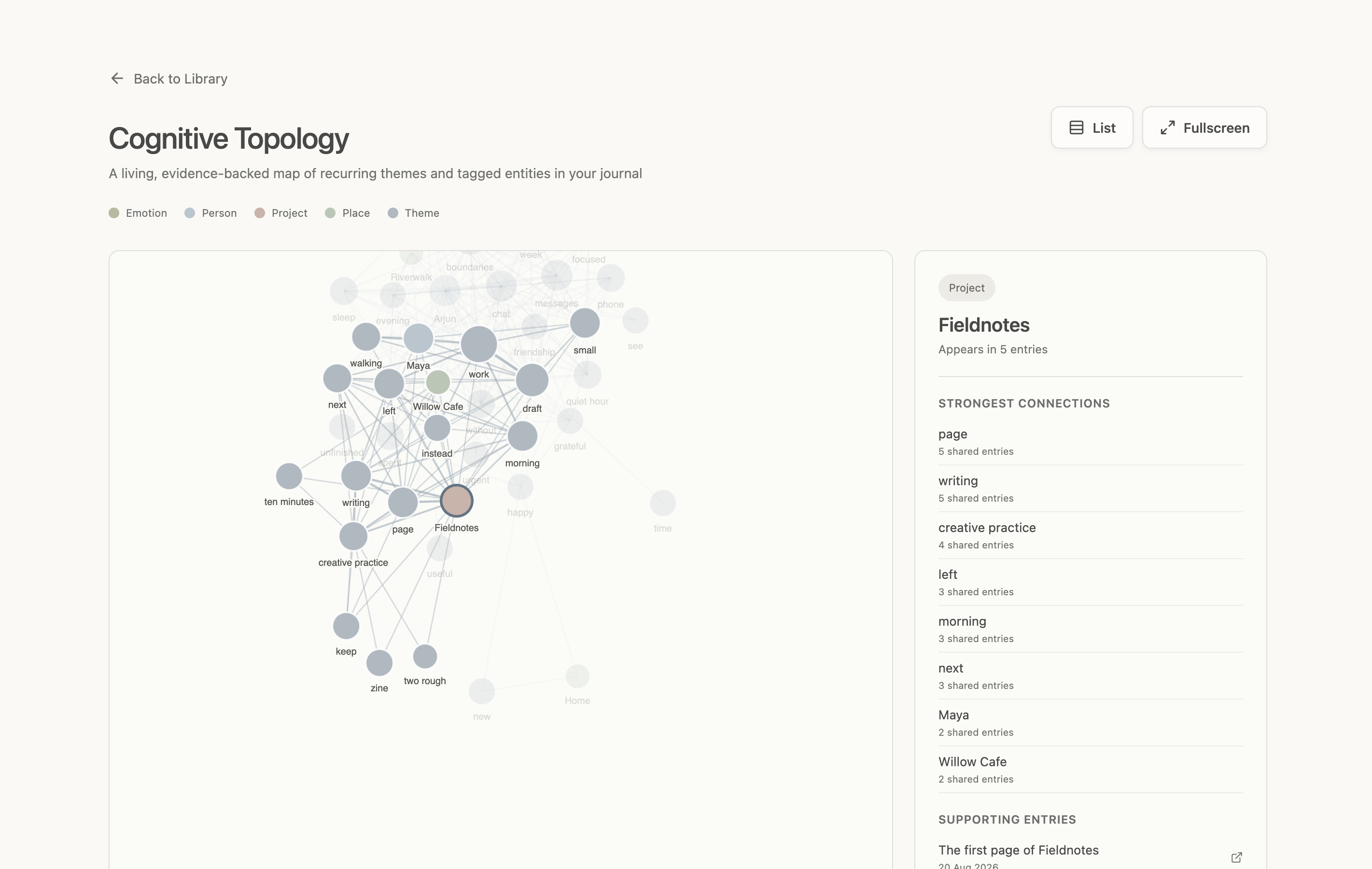
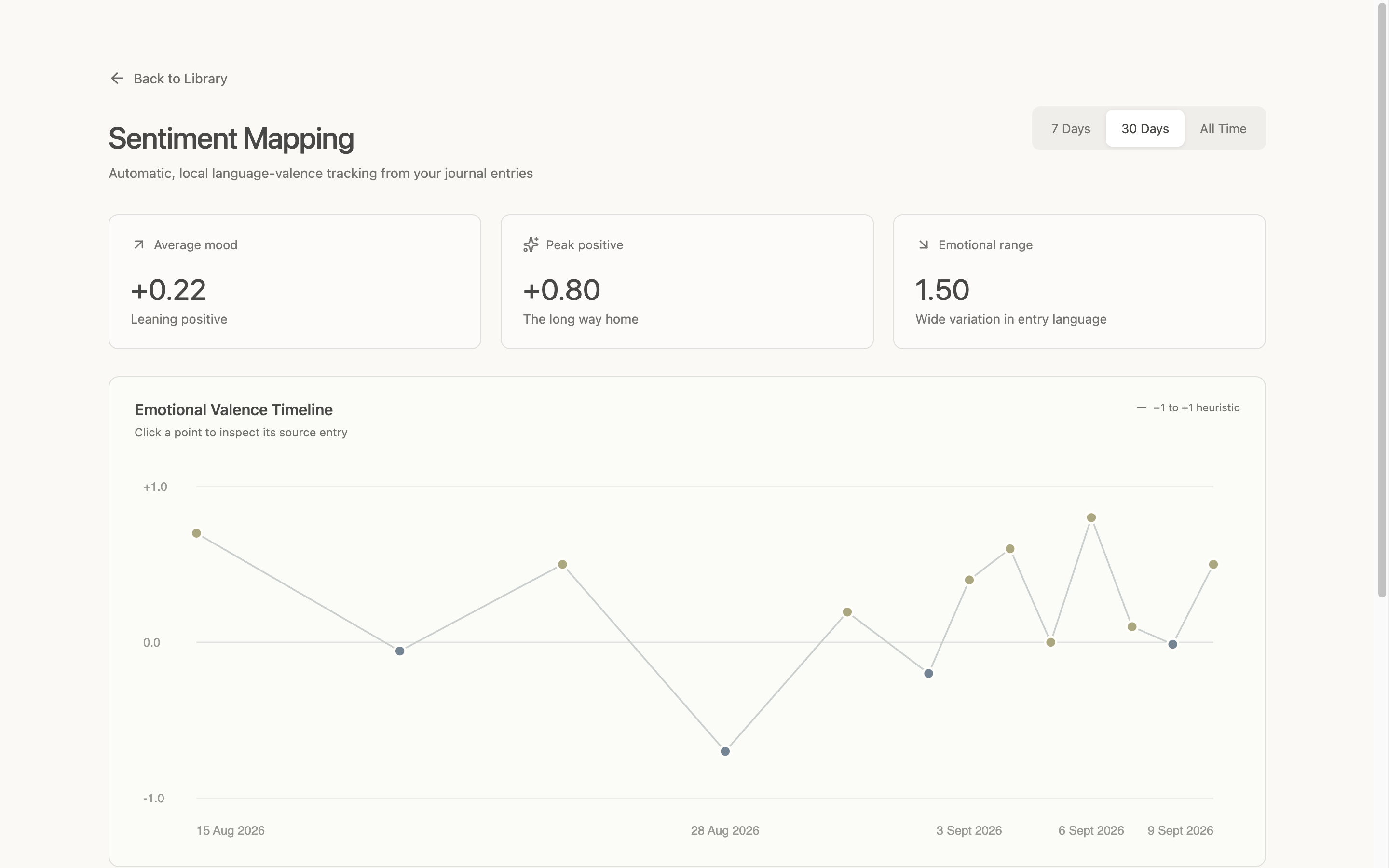
Two more ways back into the same writing.
People underestimate the value of rereading ordinary days, so the design is spent on returning. A recurring theme becomes a route back to the passages behind it. A shift in language offers somewhere to look closer, and the writer decides what it means.
What changed
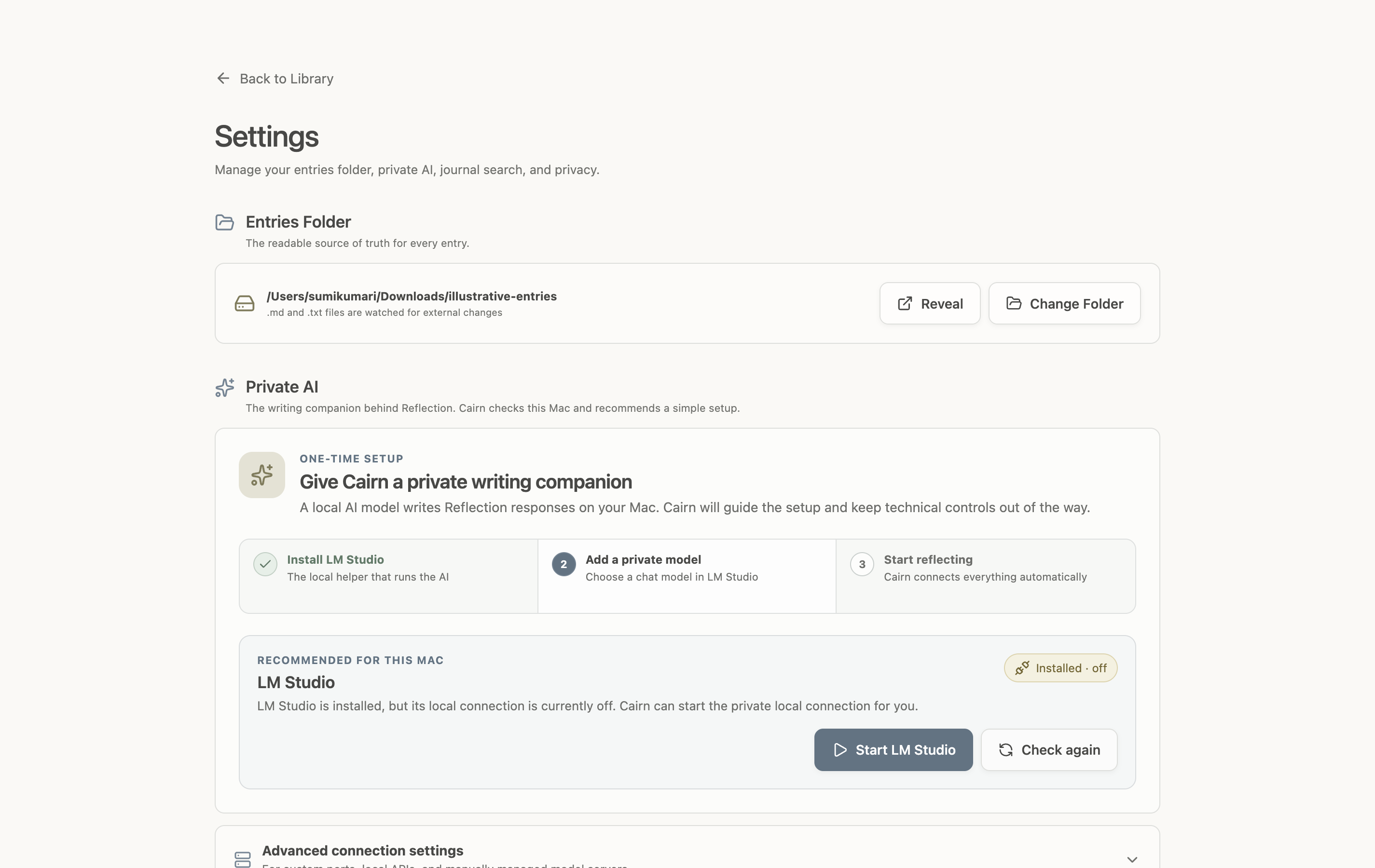
Apple Intelligence let me remove the model setup.
Writers had to install Ollama or LM Studio, choose a model, download four to eight gigabytes and keep a local server running. Once the model became a system service, that whole flow went. I accepted dependence on Apple’s supported Macs to make the journal easier to start.
Reality still pushed back. The first integration paid 5.6 to 8 seconds of model load on every request, so the helper now stays resident and the first token arrives in about 2.7 seconds. Under memory pressure macOS refuses background requests while still reporting the model as ready, so the app now says “free some memory” instead of failing silently.
Positioning
A journal that answers from your own writing. Nothing else on the Mac is both.
Every product nearby owns one half of the sentence: Apple owns the journal, the companions own the answering, Obsidian owns the files. A subscription pays for someone else’s server and Cairn has none, so the plan is one price.
Where it stands
Built enough to use. Still learning what helps.
I use the alpha as my personal journal, and nothing is validated beyond that. Five interviews are a small sample from one social world, and everything after them is secondary research.
Since the research I have shipped skins and stickers, a Touch ID lock and Mood from on-device tagging. Next is five writers with their own folders, interviewed about every answer they disagreed with. It works if they reopen entries older than a month, open the sources behind answers, and a network monitor counts zero outbound connections during a reflection.